
Derating
Using components under its maximum specified ranges has proven to be an effective way to improve electronic system reliability.


Derating
The derate concept is a common sense one. If an electronic component (say a diode) is specified to operate at maximum 40 V and 2.0 A is seems reasonable to think that its reliability is going to improve if you force yourself to operate it at a maximum of 30 V and 1.0 A.
It turns out to be that this common sense approach is endorsed by practice and different derating guidelines have grown across different electronic sectors.
Definition
The derating is defined as the ratio between used level of a parameter in your circuit over manufacturer’s specified limit.
In the previous example, the derating factor of a diode specified for a maximum reverse voltage of 40 V but used just for 30 V has a derating factor of 75 %.
From a designer’s perspective, you have to operate the other way round. Imagine you need to select a MOSFET transistor in an application in which maximum drain to source voltage (Vgs) is 32 V, and recommended derating is 80 %. Then you will have to look for transistors with a minimum Vgs of 40 V.
A derating guidelines example
There are many companies that has a large reputation of product reliability and have internal proprietary guidelines for derating. But there are some derating guidelines that are public. One example is the space sector, in which reliability is an special (and spacial) must!. The ECSS-Q_ST-30-11C belongs to the European Cooperation for Space Standardization and provides derating guidelines for electronic devices.
In the end of the document, the authors set a classification of electronic components.
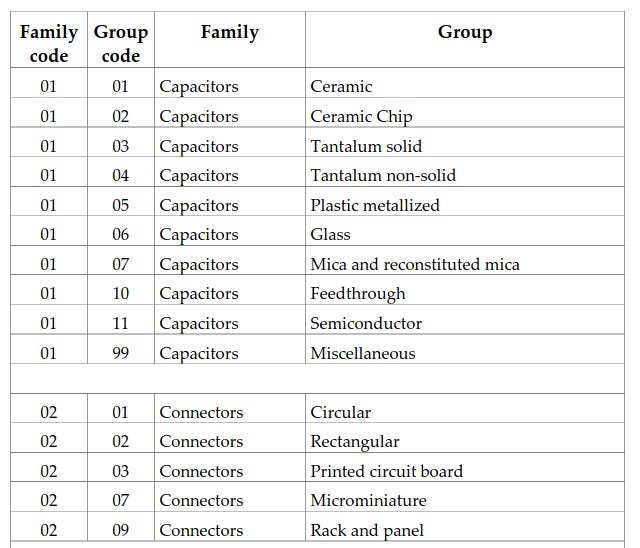
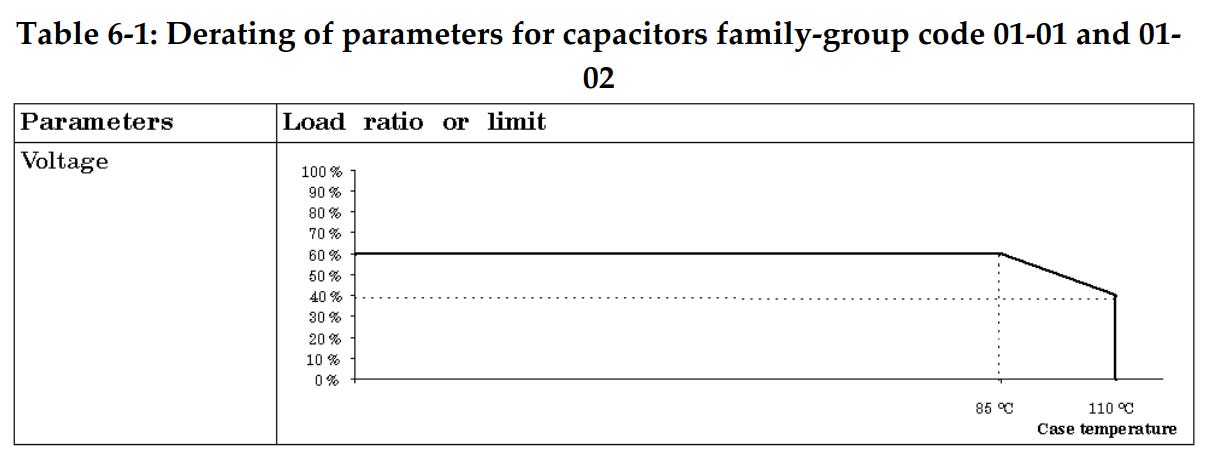
For every family group applies different guidelines. For example, derating requirements for capacitors apply for maximum DC voltage and have a derating factor of 60 % at low temperature.
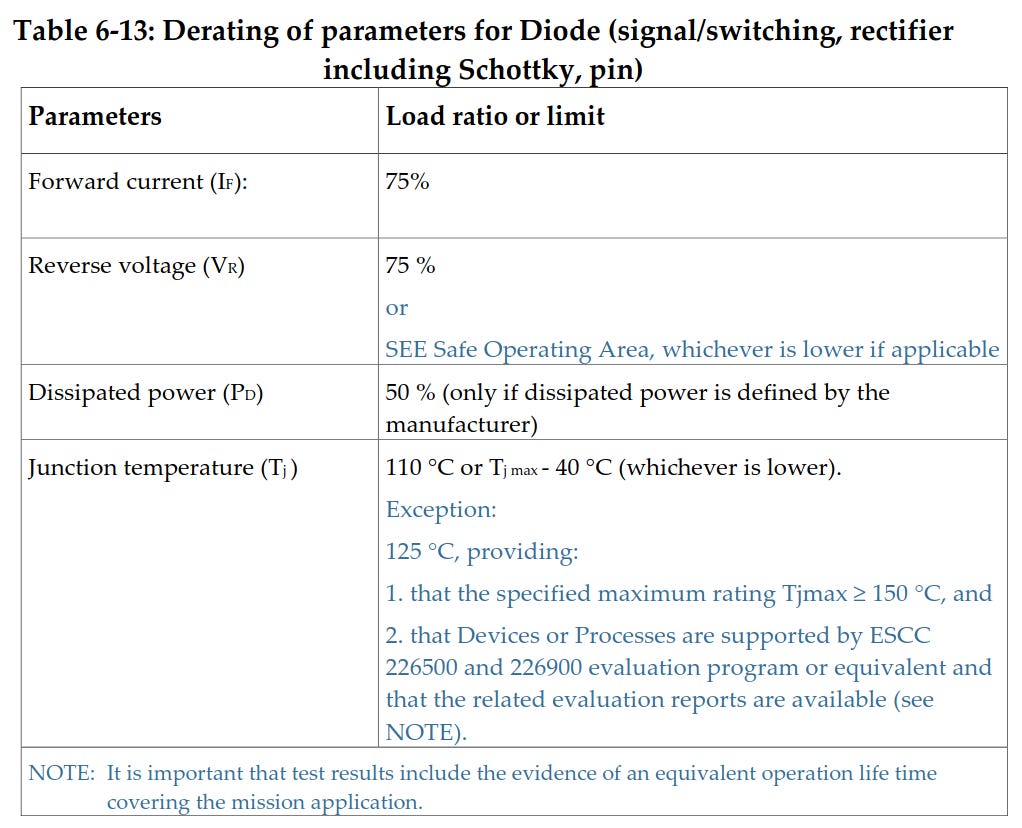
Derating guidelines for diodes is a bit more complex. They apply for more factors: forward current, reverse voltage, dissipated power and junction temperature.
Derating is likely to force you to use bigger and more expensive components, rated for heavier use. However derating component utilization is likely to be a very cost effective way to improve electronic systems reliability.